
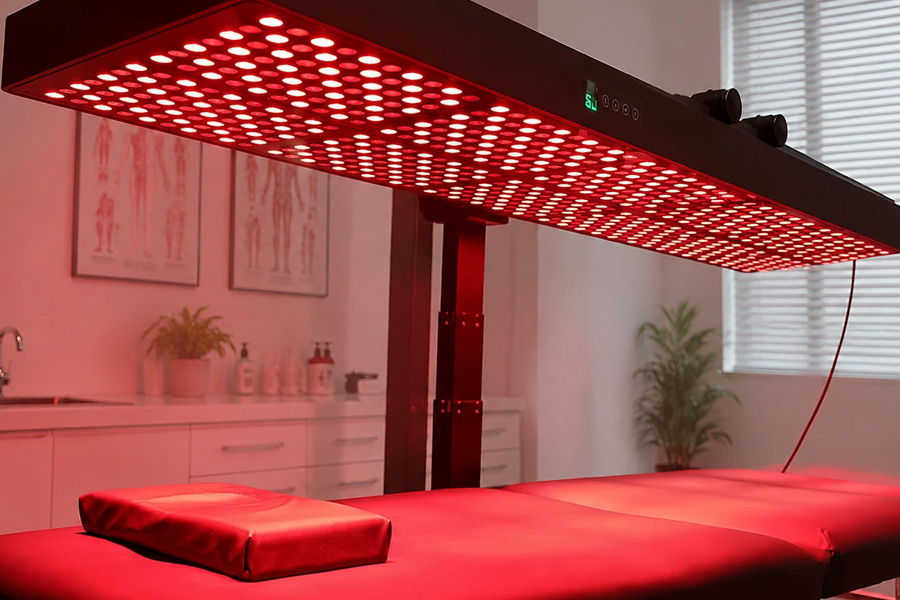
Exploring New Technology in the Red Light Therapy Manufacturing Industry
Technology continues to influence the design of wellness equipment. Red light therapy devices are available in several formats, including handheld units, facial masks, flexible wraps, and large panels. As customer expectations change, manufacturers are exploring ways to improve convenience, usability, and product performance.
Red light therapy manufacturers contribute to this progress through product research, engineering improvements, and updated production methods. Their work helps businesses find equipment suited to different customer needs and commercial applications.
Advancements in LED Technology
LEDs are essential components of many red light therapy devices. Manufacturers select LED configurations according to the product’s intended design, wavelength requirements, and coverage area.
Some devices combine visible red light with near-infrared light. Commonly specified wavelengths include approximately 630 or 660 nanometers for red light and 830 or 850 nanometers for near-infrared light. However, the right configuration depends on the device and its intended use. Buyers should examine verified specifications rather than assuming that additional wavelengths guarantee better results.
Better Controls and User Experience
Modern devices may include adjustable intensity, timers, multiple operating modes, and digital displays. These features can make equipment easier to operate in homes and professional environments.
Some manufacturers also develop remote controls or app-based interfaces. Such features can simplify operation, although their usefulness depends on the customer’s needs and the product’s design.
Improved Thermal Management
Effective heat management supports dependable electronic operation. Manufacturers can improve airflow, select suitable internal components, and refine housing designs to manage operating temperatures.
These improvements may help protect components and support consistent performance over time.
More Flexible Product Designs
Different users require different device sizes. Compact panels may suit personal wellness spaces, while larger units can provide broader coverage. Flexible wraps and wearable devices offer alternative designs for targeted applications.
Manufacturers can adjust dimensions, mounting systems, controls, and housing materials to meet specific product requirements.
The Importance of Testing
Innovation should be supported by reliable measurements. Manufacturers should document wavelengths, irradiance at stated distances, electrical performance, and relevant safety testing. Independent verification helps buyers compare products more accurately.
Technology alone cannot establish that a device provides a particular health benefit. Performance claims should be supported by suitable evidence and comply with applicable regulations.
Conclusion
New LED configurations, convenient controls, improved thermal design, and flexible product formats are shaping red light therapy equipment. Businesses evaluating red light therapy manufacturers should look for practical innovation supported by transparent specifications and dependable quality control.