Why Your Dentist Might Be Working With a Design Team You Never See
If you’ve had a crown, bridge, or other restoration made in the last few years, there’s a good chance someone you’ve never met and will never meet played a direct role in how it turned out. That might sound unusual, but it’s become a completely normal part of how modern dentistry operates, and it’s worth understanding why.
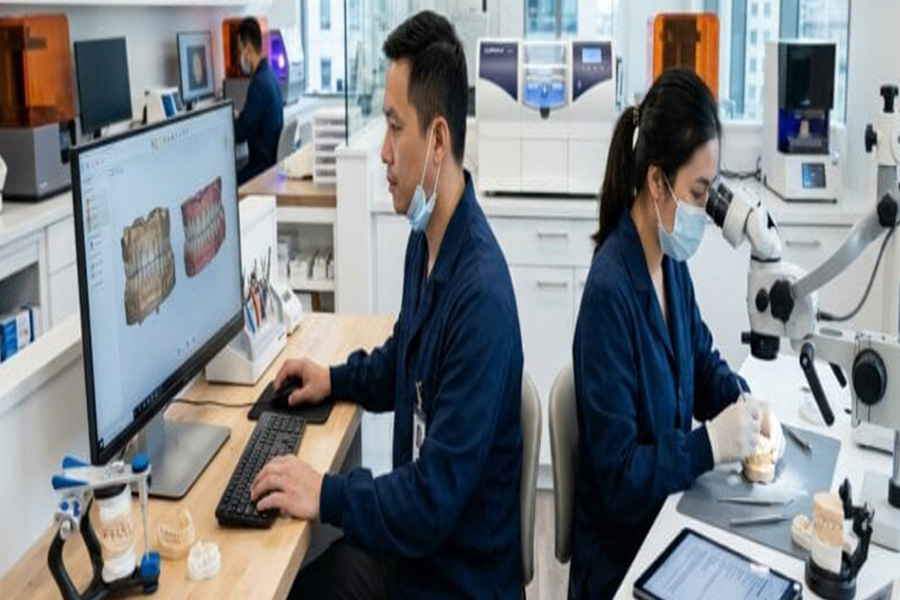
Designing a dental restoration digitally is a specialized skill, closer to technical 3D modeling than to clinical dentistry. It requires understanding not just software, but the specific biological requirements of a good restoration, correct margins, appropriate contact points, a bite that won’t cause problems down the line. Very few individual dental practices have the case volume to justify training or hiring someone full time purely for this role.
That’s why so many clinics route their scans to an outside design team instead, often an outsourced dental design partner that handles cases for many different practices, sometimes across several countries. These teams specialize entirely in the design step: reviewing the scan, building the restoration digitally, checking it against clinical standards, and sending back a file ready for manufacturing. Your own dentist stays involved throughout, reviewing and approving the design, then handling the actual fitting and any adjustments, but the file itself was likely built somewhere else entirely.
This arrangement tends to benefit patients more than it might initially seem. A team focused purely on design, seeing a high volume of varied cases, tends to develop sharper judgment about what will and won’t work clinically than someone doing this occasionally alongside other clinical duties.
So if your dentist mentions that your crown was “designed offsite” or by a “design partner,” there’s no need for concern. It simply means your restoration passed through a team built specifically to get that one part of the process right, before coming back to the person who actually knows your mouth for the final, hands-on steps.
It’s a reminder that good dental care today is often a genuinely collaborative effort involving several skilled people, even when most of that collaboration happens far from view.